
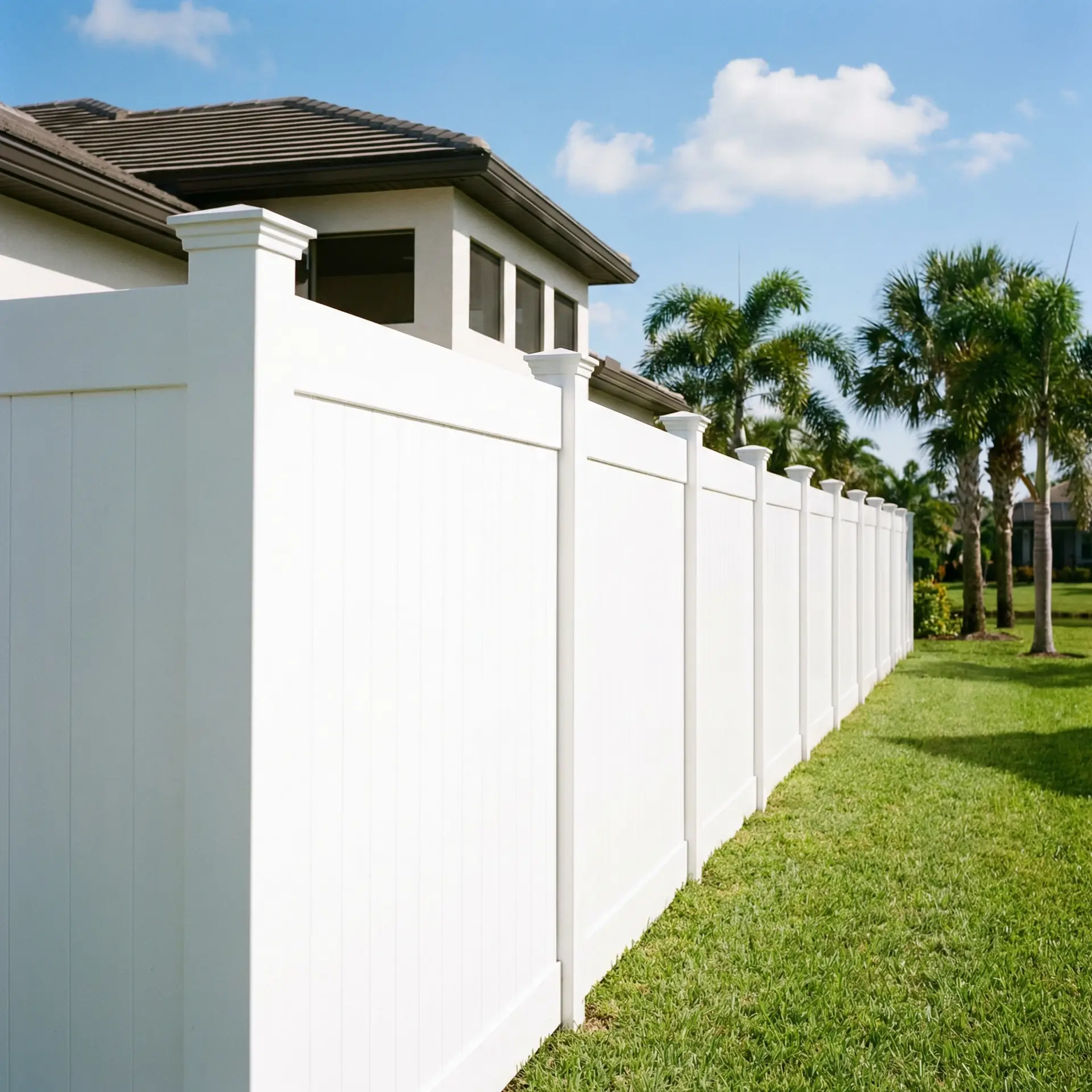
Florida's Pool Fence Law, in Plain English
Statute 515 — the Residential Swimming Pool Safety Act — is short, strict, and widely misunderstood. Here's exactly what it requires, what counts as a compliant barrier, and what it means for your Miami-Dade pool.
Updated June 2026 · By the MCM Fence team · Serving Miami-Dade & South Florida
Why This Law Exists
Florida leads the nation in childhood drownings — that’s the blunt reality behind the Residential Swimming Pool Safety Act, Chapter 515 of the Florida Statutes. The law’s logic is layered protection: a child who slips out a back door should meet a physical barrier before meeting water. For Miami-Dade homeowners, the statute isn’t bureaucracy; it’s the minimum standard of seriousness around the most dangerous square footage of your property.
The Core Requirement: One Approved Safety Feature
Statute 515.27 requires every new residential pool to have at least one of these:
- A compliant pool barrier — the subject of this guide, and the option most homeowners choose
- An approved safety pool cover (ASTM F1346 standard)
- Exit alarms — at least 85 decibels at 10 feet — on every door and window with direct pool access
- Self-closing, self-latching devices with release mechanisms at least 54 inches above the floor on direct-access doors
- A pool alarm meeting ASTM F2208
Why do barriers dominate? Because every other option depends on something being armed, closed, or charged at the moment it matters. A barrier just stands there, doing its job, 24 hours a day.
What Makes a Barrier Compliant
Statute 515.29 sets the specs:
- At least 4 feet high, measured on the outside.
- No gaps, openings, indentations, or protrusions that a young child could crawl under, squeeze through, or climb over. Height alone isn’t compliance — a 4-foot fence with a climbable horizontal rail or a wide gap at grade fails the test.
- Placed around the pool’s perimeter, and separate from the yard enclosure unless the yard fence itself meets every barrier requirement (more on that below).
- Set sufficiently back from the water’s edge so a child who breaches it doesn’t fall straight in.
And the gates — where compliance lives or dies:
- Open outward, away from the pool
- Self-closing and self-latching
- Latch release out of a young child’s reach
In the field, gates are where barriers fail: a gate that doesn’t quite latch, or got propped open for a pool party and stayed that way, cancels the entire system. It’s also why our pool fence installations treat gate hardware as the most important component, not an accessory.
Can Your Regular Fence Be the Pool Barrier?
Yes — if it fully qualifies. The statute allows the yard enclosure to serve as the barrier when the fence itself meets every requirement: the height, the no-climbable-gaps rule, and compliant gates on every entry point to the pool area. This is great news if you’re planning a new privacy or aluminum fence anyway: built right, one fence does both jobs. Built casually, you end up needing a second barrier inside the first.
How Miami-Dade Enforces It
The county enforces pool barrier rules through the permitting process — your barrier gets permitted and inspected like the life-safety structure it is. One rule worth knowing: chain link, which normally takes only a lighter Zoning Improvement Permit for residential use, requires a full building permit when it serves as a pool barrier. The full permitting picture — documents, timelines, HOA letters — is in our Miami-Dade fence permit guide.
The Penalty (and the Point)
Skipping the safety feature on a new pool is a second-degree misdemeanor. The statute offers a way out — penalties can be waived if the owner achieves compliance and completes a drowning-prevention course within 45 days of citation — but treating that as the plan means betting a child’s safety on a citation arriving before an accident does.
The honest summary: build the barrier correctly the first time. Four feet, nothing climbable, gates that close themselves — inspected, permitted, done. If a storm ever takes that barrier down, restoring it is your first call, not your last; our storm damage guide covers that exact scenario.
MCM Fence installs permanent aluminum and vinyl pool barriers across Miami-Dade and nearby Broward — built to Statute 515 from day one, permit package handled, inspection-ready. Get a free estimate or call (786) 209-9966.
Pool Fence Law FAQ
Make Your Pool Barrier Compliant — and Beautiful
Licensed, insured, and based in West Kendall — free on-site estimates across Miami-Dade and South Florida.