What Does a Fence Cost in Miami-Dade?
Almost no fence company in Miami publishes prices. We think that's backwards — you can't plan a project around a mystery. Here are the real market ranges, what moves the number, and what should already be included in an honest quote.
Updated June 2026 · By the MCM Fence team · Serving Miami-Dade & South Florida
The Numbers Nobody Else Publishes
Here are the typical installed market ranges for the Miami area. These come from third-party market data and what we see in the field — treat them as honest starting points, not promises. Your final number depends on the factors in the next section.
| Material | Typical installed price (per linear foot) | Notes |
|---|---|---|
| Chain link, 4 ft | $10 – $13 | Most affordable option |
| Chain link, 6 ft | $14 – $17 | Commercial grades run higher |
| Wood privacy, 4 ft | $17 – $24 | Lowest upfront cost; highest upkeep here |
| Aluminum | $20 – $30 | Premium ranges reach higher for ornamental |
| Vinyl, 4 ft | $26 – $33 | National range is wider ($15 – $40) |
| Vinyl privacy, 6 ft (HVHZ-grade) | ~$30 – $45 | The most popular residential choice |
| Fence repair | ~$250 average | Most jobs $200 – $300; storm damage can reach $1,400+ |
Why are we publishing this when nobody else does? Because hiding prices doesn’t make them lower — it just makes you call five companies to learn what one table could tell you. You’ll still need an on-site quote for your exact number, but now you can sanity-check every quote you receive, including ours.
The Five Factors That Move Your Number
- Linear footage. The main driver. More fence costs more — though per-foot pricing usually drops slightly on larger runs as fixed setup costs spread out.
- Height and material grade. A 6-foot privacy panel costs more than a 4-foot picket, and HVHZ-grade material costs more than the big-box version of the same material — more on that below.
- Gates. Walk gates, double-drive gates for vehicles, and automatic gate openers are each their own line item. A quote that doesn’t itemize gates is hiding something.
- Site conditions. Existing fence removal and hauling, sloped or obstructed fence lines, tree roots, concrete cutouts — and Miami-Dade’s hard oolitic limestone, which makes proper post holes real work.
- Permits and HOA. Miami-Dade requires a building permit for wood, masonry, aluminum, and vinyl fences (a Zoning Improvement Permit for residential non-pool chain link), and HOA communities need the association’s letter filed with the application. Our Miami-Dade permit guide covers the whole process.
Why Miami Costs More Than the National Calculators Say
The materials are different here — by law. Miami-Dade and Broward form Florida’s High Velocity Hurricane Zone, the strictest wind standard in the state (175 mph ultimate design wind for typical homes, a standard born after Hurricane Andrew). Properly specified fence systems for this market — thicker vinyl profiles, reinforced posts, products documented with Miami-Dade NOA or Florida Product Approval — simply cost more than the generic grade national cost calculators assume. Cheap material that ignores this is cheap right up until the first storm season; our hurricane prep guide explains what happens then.
The ground is different too. Soft-soil markets dig post holes fast. Much of Miami-Dade sits on oolitic limestone — hard, unforgiving rock that takes real labor to dig correctly. Posts set shallow to save that labor are the leaning posts you see after every storm.
Material by Material: Where Your Money Goes
Chain link — the budget workhorse. Cheapest to install, genuinely durable in coastal air when galvanized or vinyl-coated, and its open mesh sheds wind. The catch: no privacy, utilitarian looks, and no front yards in unincorporated Miami-Dade. Details on our chain link page.
Wood — lowest upfront, highest upkeep. Pressure-treated wood fencing gives you the classic look for the lowest initial price, but South Florida’s UV, humidity, and storm seasons make it the hardest-working material on this list. Budget for sealing and expect a shorter life than vinyl or aluminum.
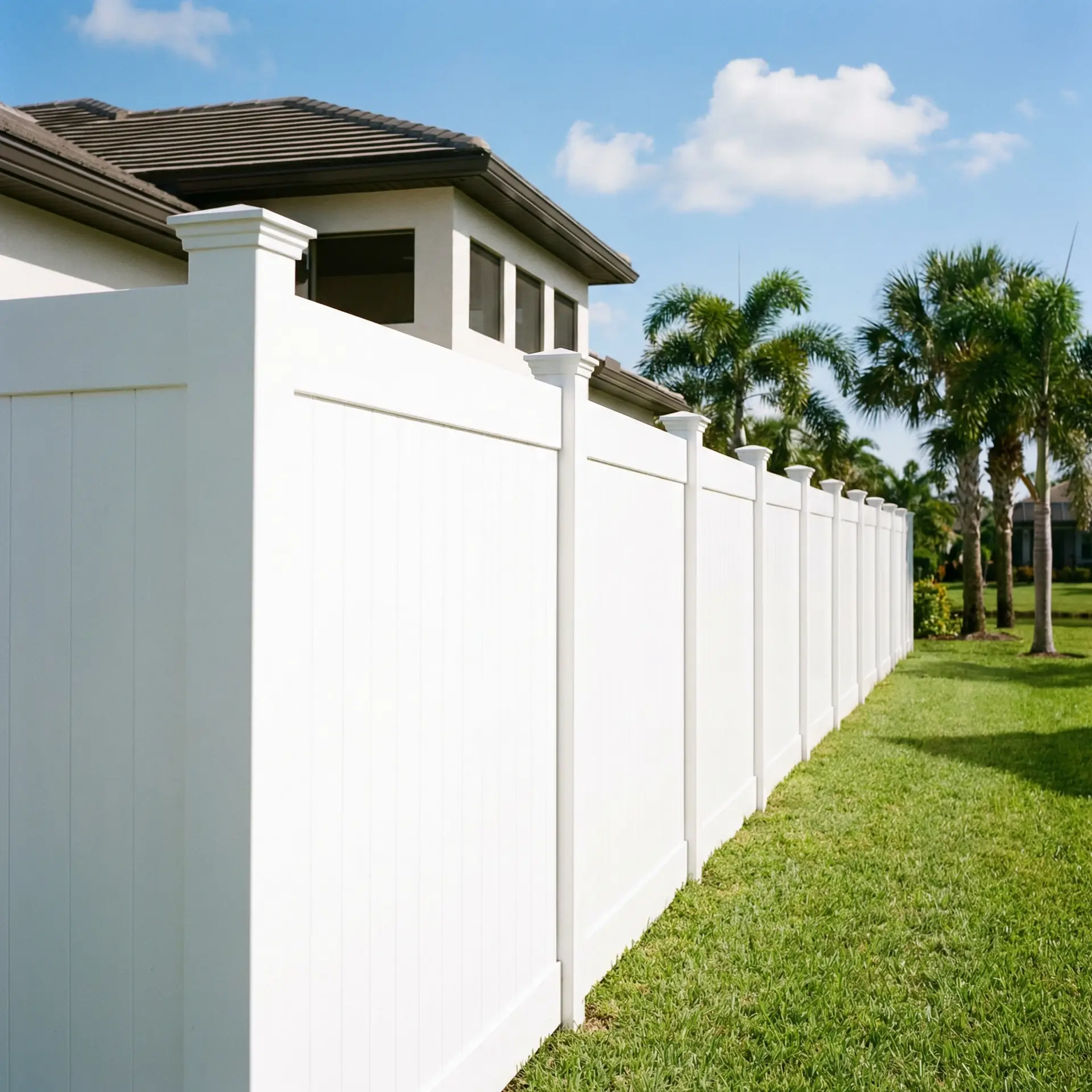
Vinyl — the total-cost-of-ownership winner. Immune to rot, termites, and humidity; never needs paint. The popular choice for privacy fencing across Miami-Dade’s HOA communities, and the one we install in HVHZ-grade — see our vinyl page for styles and specifics.
Aluminum — the coastal premium. Powder-coated aluminum never rusts, sheds wind through its open pickets, and doubles as a code-compliant pool barrier. Costs more upfront; asks nothing afterward.
What an Honest Quote Already Includes
When you compare quotes, check what’s inside the number: proper post depth and properly mixed concrete (not dry-poured), HVHZ-appropriate material, permit handling with itemized fees, gate hardware specified for salt air, and debris haul-away. A suspiciously low quote is usually missing two or three of those — and you’ll pay for them later, with interest.
Free on-site quotes, fixed numbers, across Miami-Dade and nearby Broward. Request yours or call (786) 209-9966.
Fence Cost Guide FAQ
Get Your Exact Number — Free On-Site Quote
Licensed, insured, and based in West Kendall — free on-site estimates across Miami-Dade and South Florida.